
Training and
Operations
Specialised training in wildfires: practical learning for safer suppression.
EGIIF project in Ecuador
The EGIIF project (from Equipo de Gestión Integral de Incendios Forestales) aims to implement the strategy for integrated wildfire management in Ecuador, establish four forestry brigades, and develop a wildfire awareness program within the framework of the Amazonia+ Program. All of this aims to improve wildfire response and prevention capacity in the region.
EGIIF Ecuador has three specific objectives: The project has three specific objectives:
- To establish and train four forestry brigades specialized in the prevention, control, management, and suppression of wildfires, with the goal of strengthening emergency response capacity.
- To develop and implement a detailed action plan for integrated wildfire management-EGIF.
- To promote environmental awareness and education in local communities about the importance of wildfire prevention and the protection of natural resources in the Ecuadorian Amazon.
The project is part of the priority areas of EU cooperation aimed at contributing to the fight against deforestation, forest degradation, and sustainable forest management, as well as preventing, monitoring, controlling, combating, and remedying the impacts of wildfires.
Specifically, the program’s stated objective is to support Amazonian partner countries (Bolivia, Brazil, Colombia, Ecuador, Guyana, Peru, Suriname, and Venezuela) in mitigating CO2 emissions, adapting to the effects of climate change, and improving biodiversity protection. The specific objective is to strengthen the prevention of deforestation and forest degradation in the Amazon rainforest with the participation of Indigenous Peoples and local communities.
During 2024, a detailed work plan was prepared, and the necessary steps were taken to equip the four forestry brigades with tools and PPEs. Fieldwork is planned for early 2025 with the implementation of two cross-border training sessions for community brigades. This will continue with an EGIF that will focus not only on fire management at the level of firefighting equipment (Training and Operations Area’s team) but also on community awareness-raising efforts through the Resilient Societies Area’s team.
Other training
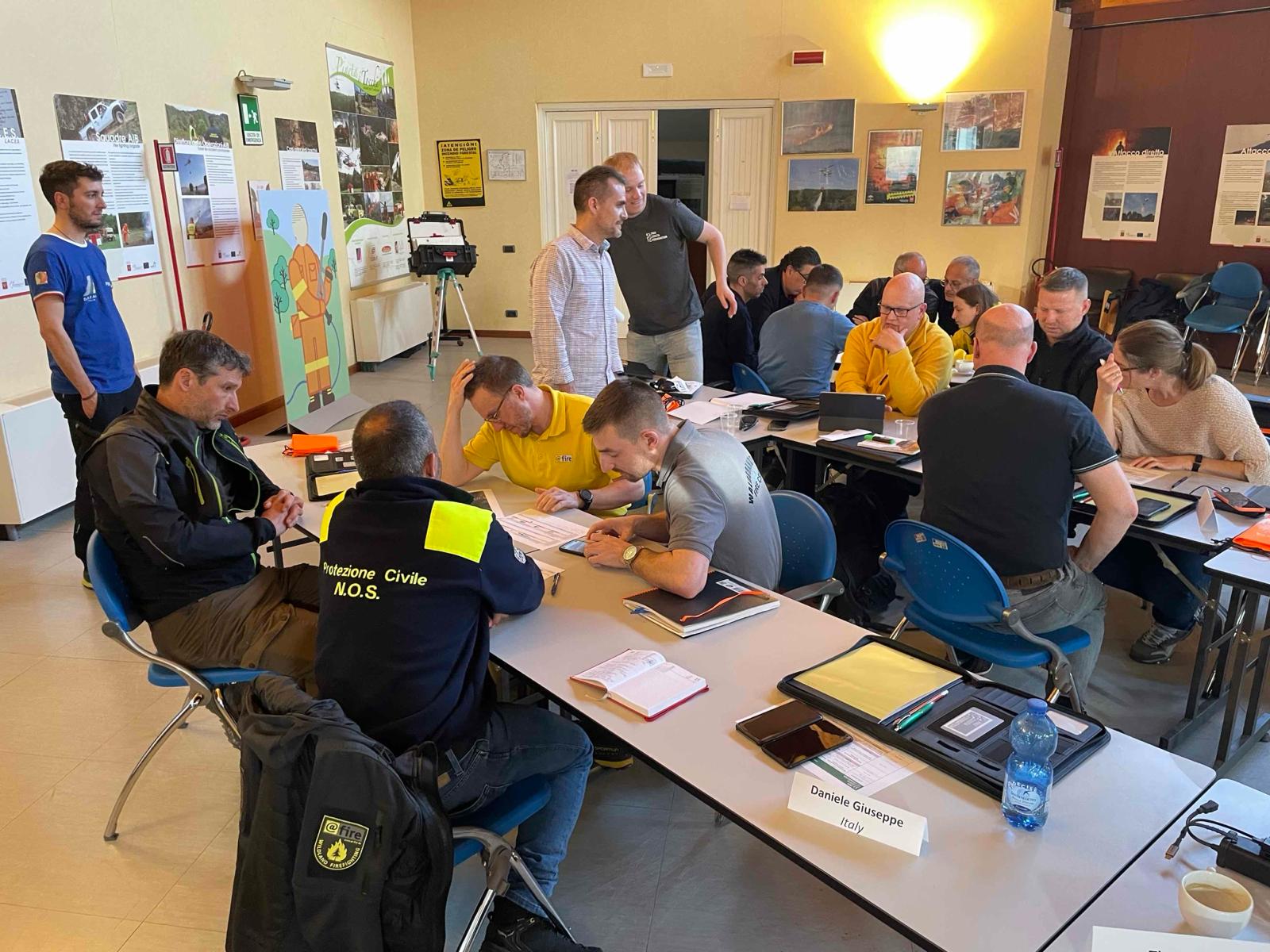
Fire Weather Training
Date: March 18-21, 2024
Location: La Pineta (La Toscana, Italy)
Entity: DREAm Italia and the Pau Costa Foundation
Specialized course for creating basic weather forecasts and translating them into a forecast of fire behavior and development, as well as for better understanding more specialized analyses of meteorological information on wildfires. More about the course here.
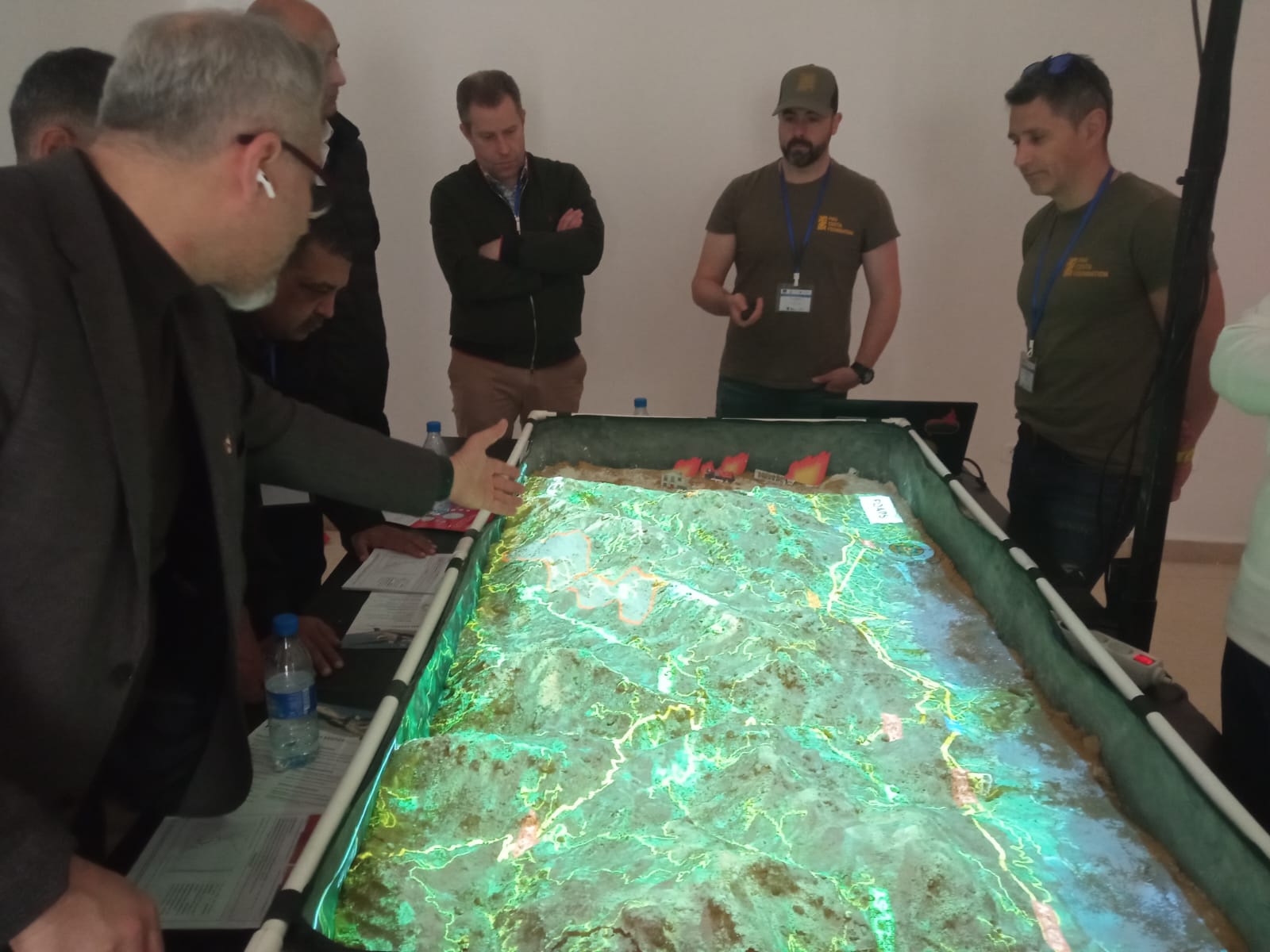
Session at the Euro-Mediterranean Forest Fires Workshop on Prevention and Fight Against Forest Fires and Natural Areas
Date: April 23-25, 2024
Location: Tunisia
Entidad promotora: Union for the Mediterranean (UfM), Office National de la Protection Civile de la Tunisie and DG European Civil Protection and Humanitarian Aid
Thanks to the Union for the Mediterranean (UfM), we participated in this workshop (see report), which addressed technical and operational aspects related to regional and cross-border assistance in responding to major wildfires on the southern shore of the Mediterranean, with the aim of establishing a framework for cooperation. We presented the Foundation’s Training and Operations Area and held a workshop on fire behavior with the sandbank.
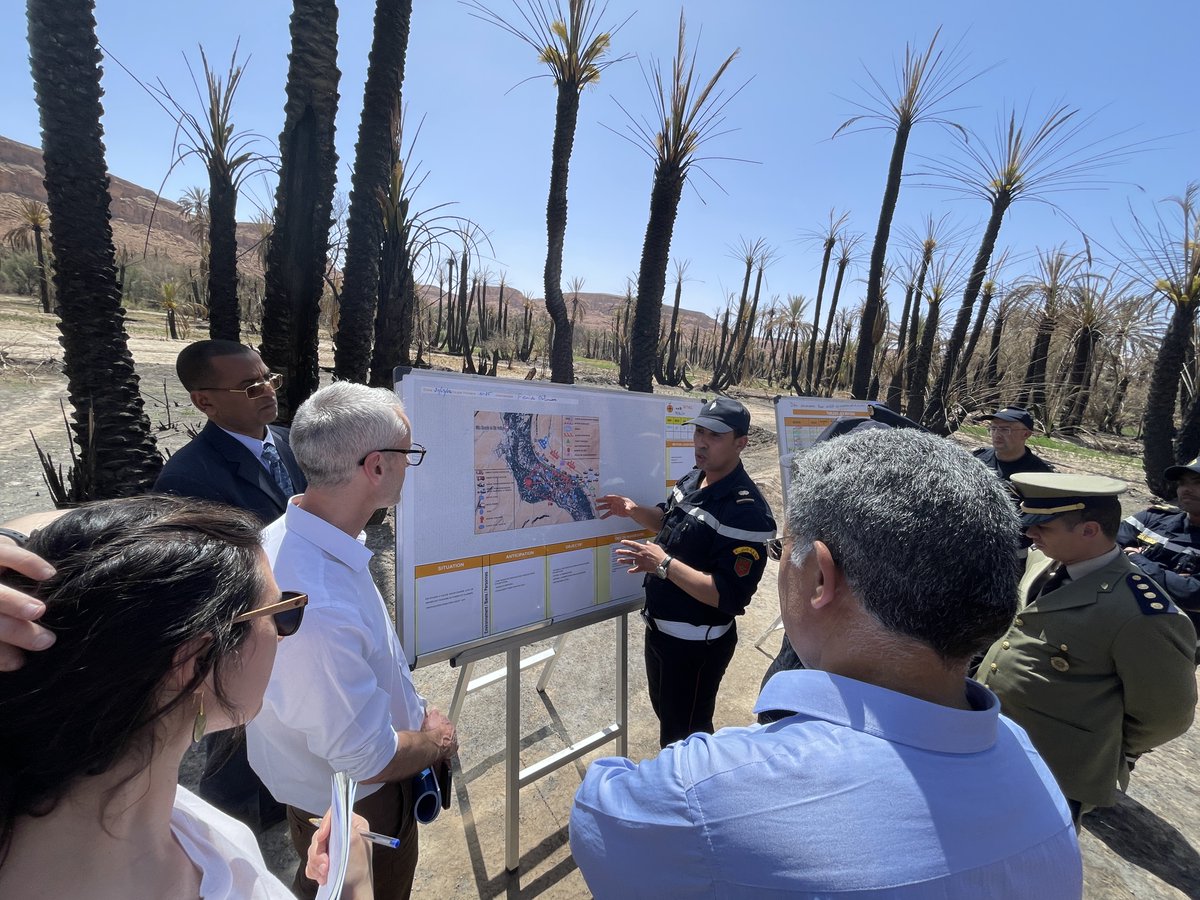
Advice on wildfire in date palm oasis
Together with the European Forest Institute (EFI), we participated in a visit to a date palm oasis in Morocco, where fires are impacting the socioeconomic balance, causing people to displace and abandon the rural environment. Juan Caamaño, head of the PCF’s Training and Operations Area, met and shared insights with local authorities and stakeholders to improve prevention, governance, and training measures.
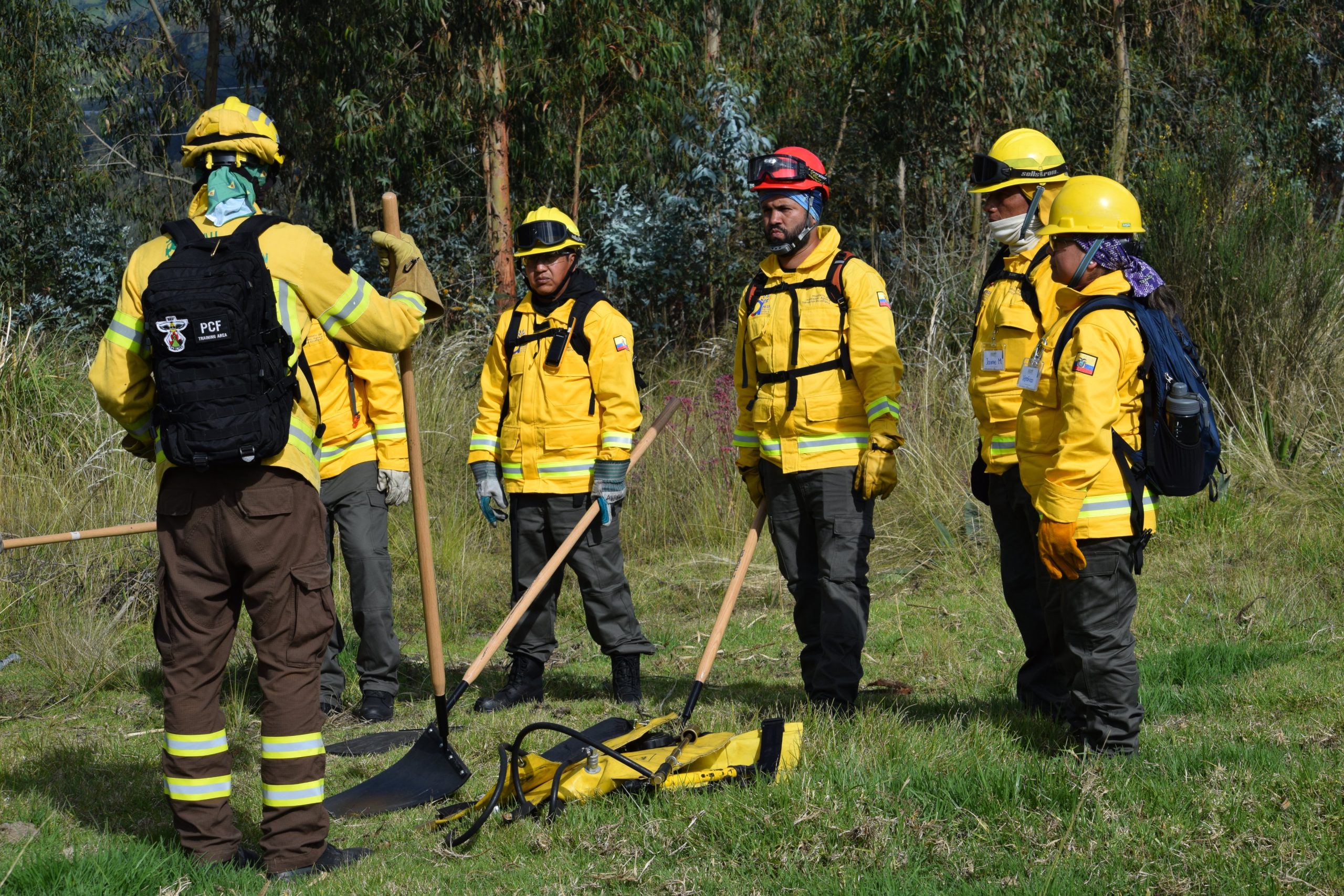
Training of Specialist Brigadists in Integrated Fire Management (BREMIF)
Date: April-October, 2023
Location: Ecuador
Entity: Ecuador’s Environmental and Sustainable Investing Fund
Technical assistance contract with Ecuador’s Sustainable Environmental Investment Fund. The objective was to design, plan, and implement nine courses for Specialist Brigadists in Integrated Fire Management (Brigadistas Especialistas en Manejo Integral del Fuego, BREMIF) and three courses for Integrated Fire Management Specialist Brigade Leaders (L-BREMIF), in addition to drafting a technical analysis of the entire process.
Forest Camp 2024
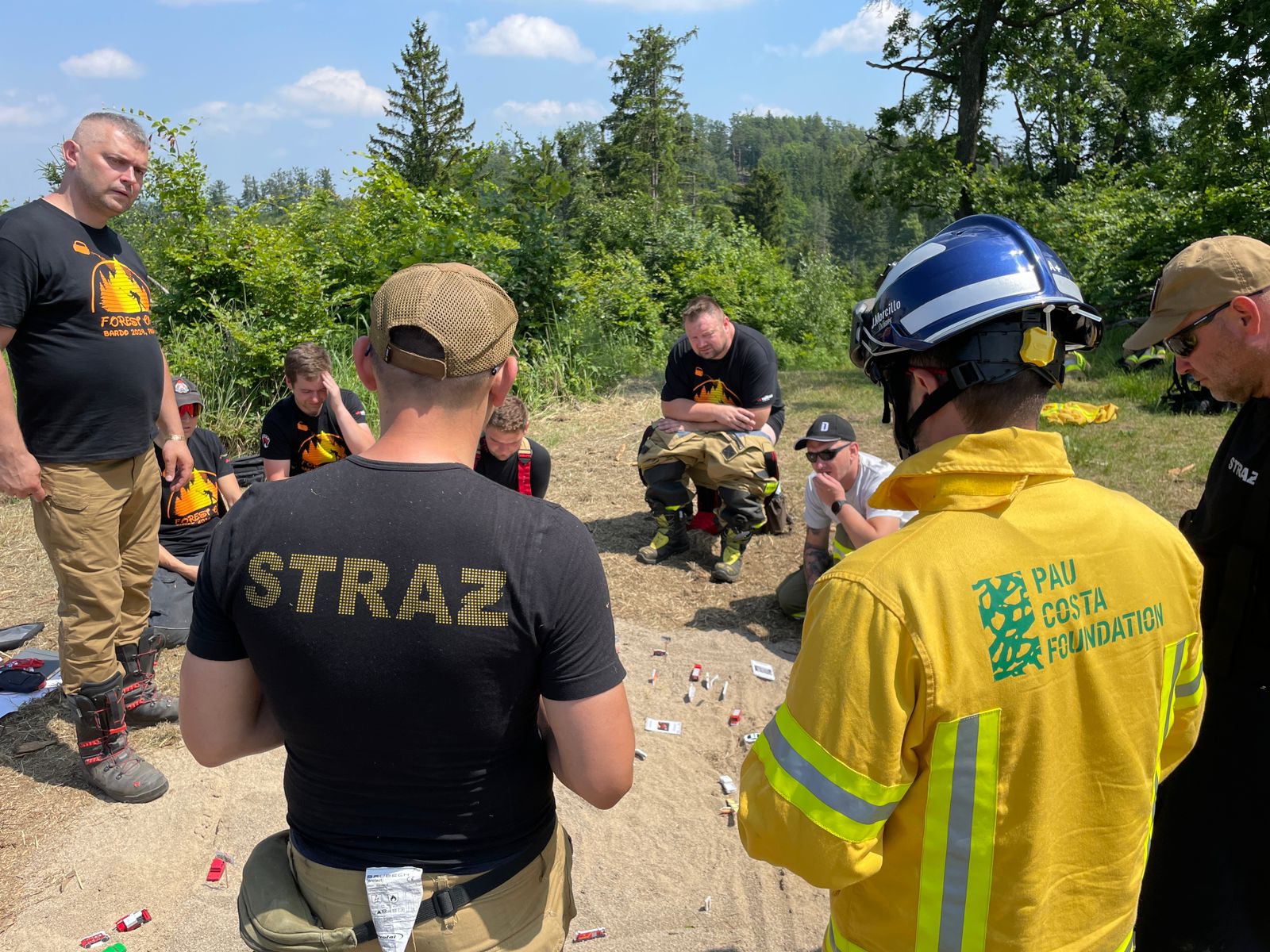
We participated again as instructors in one of the workshops held for this activity aimed at firefighters. The Forest Camp is based on practical exercises that participants must complete at different stations that offer activities related to wildfire prevention and suppression. In 2024, the workshop we conducted aimed to introduce the strategic and tactical levels, as well as the human factor, in wildfire management.
Mini EGIF (Equipo de Gestión de Incendios Forestales) Bolivia
Date: August-September 2024
Location: Santa Cruz de la Sierra (Bolivia)
Entity: Spanish Agency for International Development Cooperation (AECID)
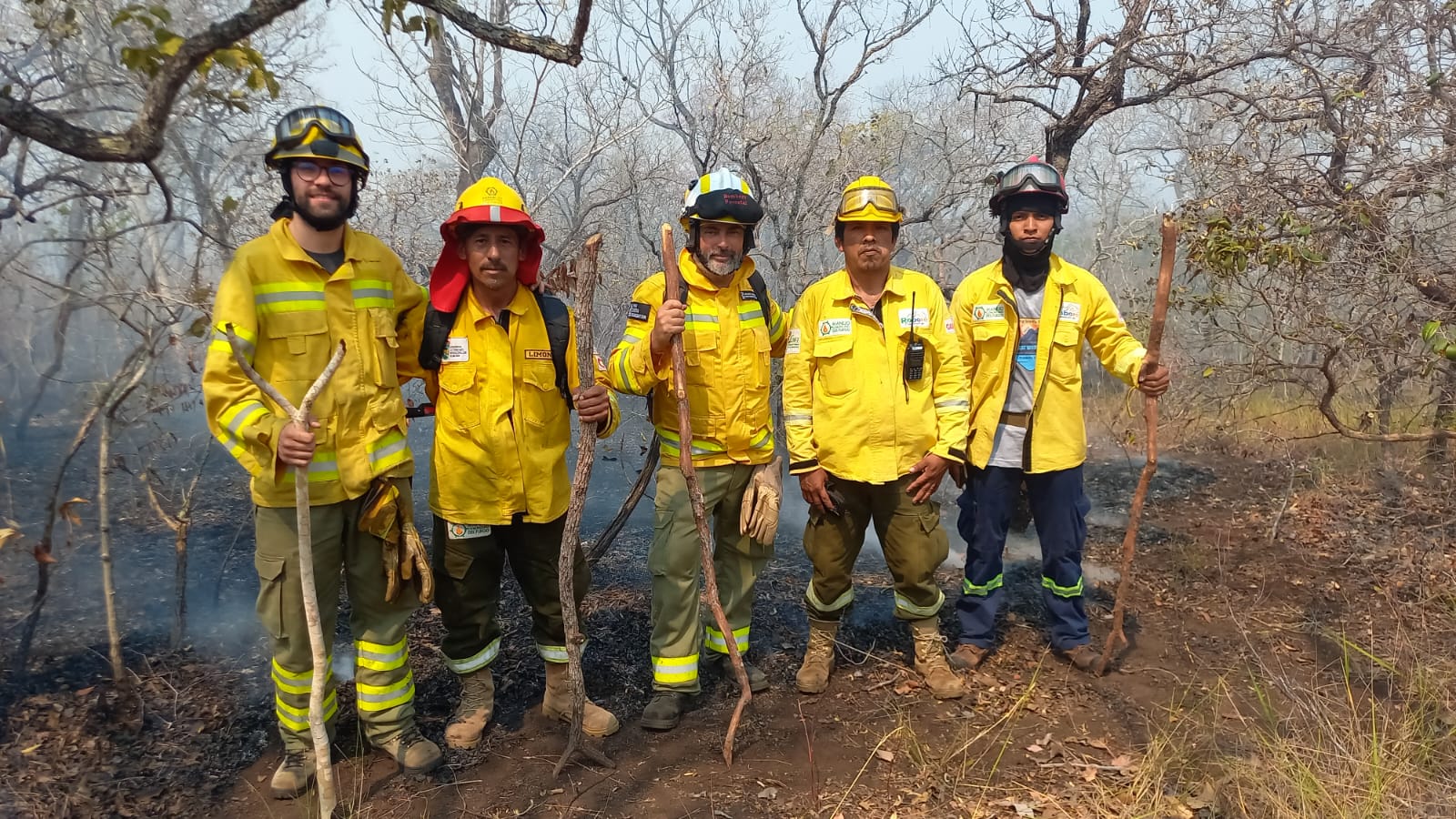
Within the framework of an agreement with AECID and in collaboration with the Fundación Amigos de la Naturaleza (FAN), we provided technical assistance to promote the exchange of experiences, knowledge, and lessons learned around wildfire management, thus empowering the region, its organizations and professionals, and the global knowledge networks of the fire community. The program is structured around different thematic axes, focusing on emergency organization, how to apply the theory of the Incident Command System in operations, and incorporating fire behavior analysis into the decision-making process. All of this was carried out in a real fire scenario. In 2004, we worked on analyzing and diagnosing the situation with the goal of beginning to implement the program in 2025.
Fire Analysis Training
Date: November 2-December 2, 2024
Location: Military training area Lehnin/ Brück (Bundeswehr), Germany
Entity: @Fire
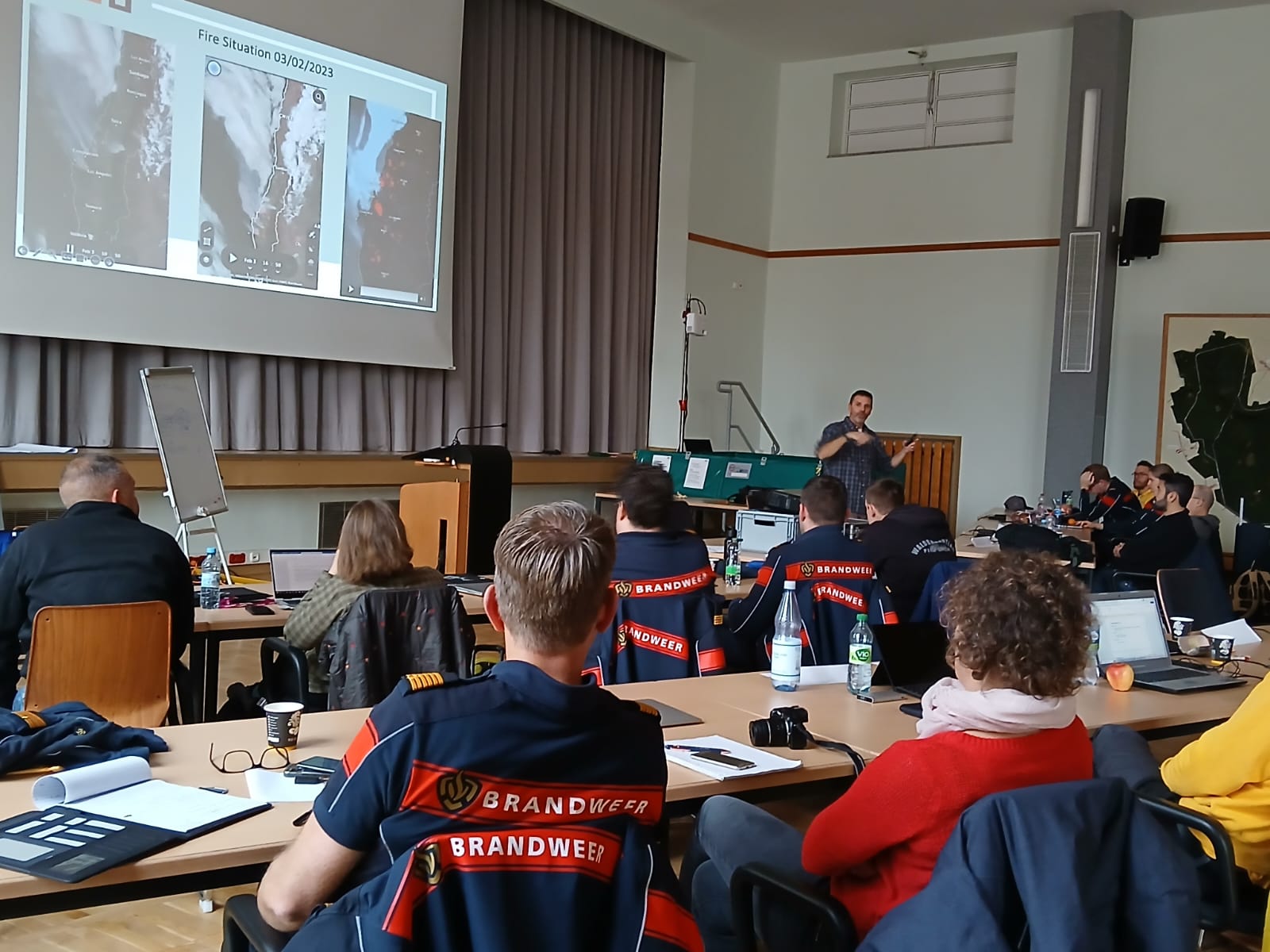
We conducted this course together with TEP to provide tools and knowledge so that commanders and operational managers can anticipate the behavior and evolution of a wildfire and design strategies and tactics based on that anticipation, improving operational efficiency and safety. The course provided the analytical skills necessary to plan firefighting operations in a designated area; skills to identify potential and priorities for wildfires; skills to analyze fire fronts; and learning how to identify and communicate wildfire behavior.